
Industrial Workers Deserve Clinical-Grade Medical Care. Here's How We Built It.
When Michelle Whiting stepped into her role as Iowa Division Manager at Elite Industrial Services, she brought 14 years of clinical wound care experience and a vision for how industrial medical care should look. What she found at the SSAB steel mill site was a first aid room that functioned more like a supply closet than a treatment facility - a reality that nearly cost precious seconds during a life-threatening electrical incident.
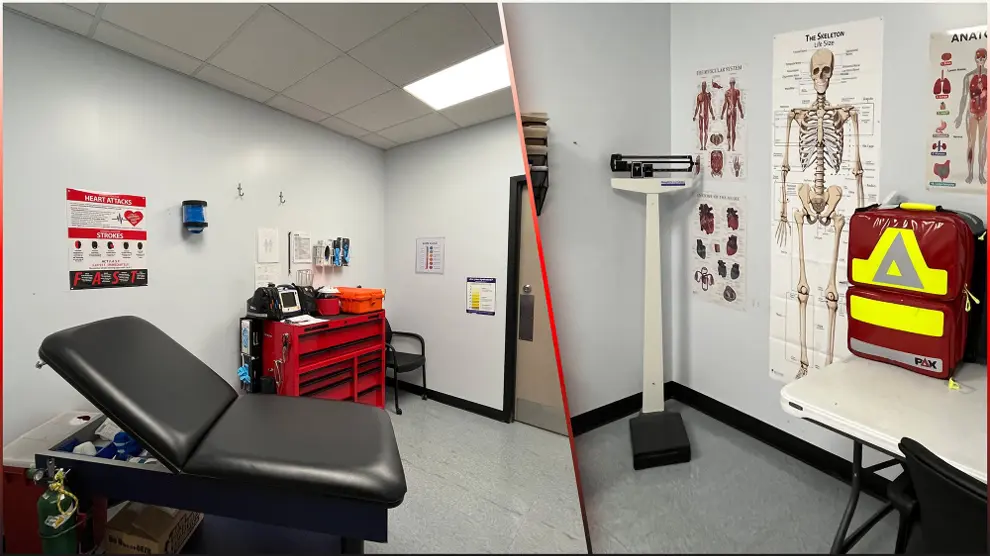
SSAB deserves credit here. A lot of manufacturing sites don't have the same focus on emergency medical services - many times there is only one dayshift site medic, plus a few AEDs and first aid kits. SSAB had already invested in having Elite Industrial's full-time paramedic team on-site. They had a dedicated space, and professional equipment available. The fact that we're able to share this story means there was already a genuine commitment to worker safety.
But, the reality of big business means investments and improvements need to be presented, considered, approved, and all of this takes time and starts from somewhere. in this case, we were starting from a shared storage room as our base of EMS operations.
The 420v Wake-Up Call
We were working out of a medical bag that was hard to organize and a supply cabinet. This made it hard to find supplies quickly. The cardiac monitor was off in a corner and not easily accessible, and supplies stacked on top of each other makes pulling exactly what you need time-consuming. Time is what you have the least of in an emergency situation.
We had been lobbying to bring a more clinical approach to the first aid room, but it was a challenge to sell the need for it. The prevailing wisdom suggested that since my team would primarily respond out into the mill, a dedicated clinical space wasn't necessary. But, our experience told a different story.
Over the years, I've observed that 85-90% of patients in this industrial setting actually walked into my office requesting medical assistance. The most common presentations were chest pain, hypertension, crush injuries, and burns - serious conditions that require a professional treatment environment, not a storage closet or field triage.
The turning point came when a contractor walked through the door after being hit with 420 DC volts. As the on-duty paramedic scrambled to provide critical cardiac care, the disorganization of the space became painfully apparent. Medical supplies were scattered across storage cabinets, the cardiac monitor sat inaccessible in a corner, and the medical bag made finding equipment a frustrating treasure hunt during a moment when every second counted.
The Transformation: Building a Clinic From a Closet
Following the electrical incident, everyone knew it was time to act. But, here's the reality of working as a sub-contractor inside of a massive manufacturing organization: there are budget cycles, purchase orders, approval cycles - and all of these things take time. It wasn't a question of the company seeing the value anymore, but we didn't want to wait for the next budget cycle to potentially add funds for a complete overhaul. Instead, we asked ourselves: How much could we improve with minimal cost? I think we surprised ourselves with the answer.
Step 1: Separate Treatment from Storage
The first and most impactful change cost us nothing. We relocated both storage cabinets to a different room. Physically separating our treatment area from supply storage transformed the space from "shared storage room with medical equipment" to a dedicated clinical environment.
Look at your current layout. Is your first aid room trying to serve multiple purposes? Sometimes the best improvement is just claiming the space for its intended purpose. Even if you can't use multiple rooms, making sure that you dedicate areas of a room to separate concerns can drastically help with efficiency.
Step 2: Manufacturing a Solution
Here's where we got resourceful. We needed a trauma cart - we'd just moved the storage out of the room but we still needed to keep critical supplies on hand. Something mobile, organized, and immediately accessible. A traditional medical cart would require a purchase order, vendor selection, and weeks of procurement.
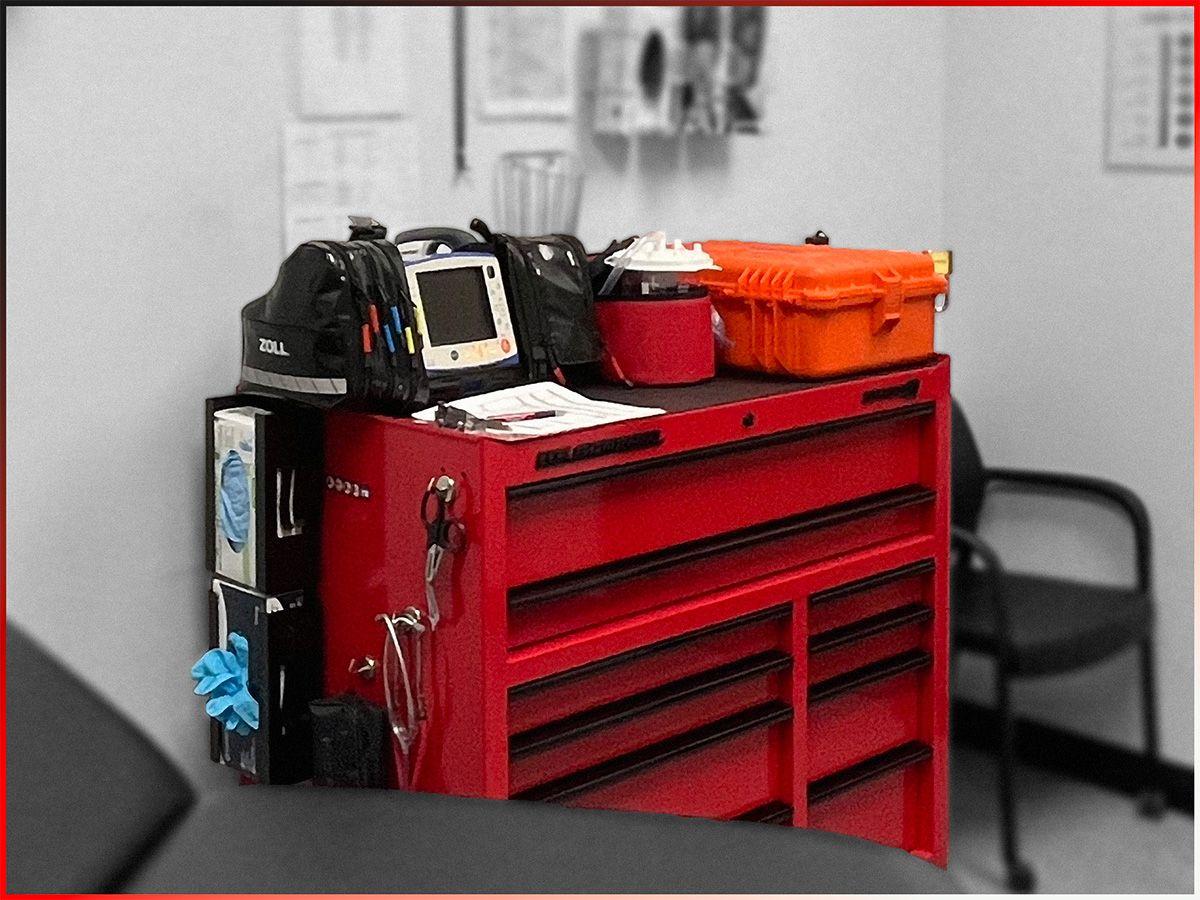
Trauma carts at medical supply companies are incredibly expensive, and aren't necessarily suited for the type of environment that we were in. Instead, we reached out to the maintenance team and found there was an extra rolling toolbox. It was perfect: multiple drawers, heavy-duty wheels and the right height for working. We modified it to serve as our dedicated trauma cart - and it honestly works better than some purpose-built medical carts I've used in clinical settings.
Don't wait for the "perfect" solution. Look around your facility - maintenance shops, equipment rooms, other departments... Industrial facilities are full of sturdy, well-designed equipment that can be repurposed.
Step 3: Investing where it matters
With the layout solved and the trauma cart repurposed, we identified three critical purchases that would actually require budget:
- A proper medical bag ($~300-400) The old one was poorly organized and slowing us down
- Updated drug box ($~500-600) Ensuring we had current medications properly secured
- Organizational supplies ($~400-500) Drawer organizers, labeled containers, proper mounting for monitors
Total investment: Under $1,400
Focus your budget on items that directly impact emergency response speed and medical capability. Everything else can likely be solved with creativity and reorganization.
The Industrial Medical Clinic
- A dedicated clinic chair positioned for easy patient assessment
- A comprehensive trauma cart with all supplies for medical and trauma emergencies organized by drawer and immediately accessible
- Properly positioned cardiac monitor & portable suction, mounted within arms reach instead of sitting in a corner to be pulled out when it's needed.
- A consultation table for non-emergency patient interactions and paperwork so that we can get workers back into the field as efficiently as possible.
- Appropriate sharps containers & organized medication storage to eliminate any chances of introducing hazards
Everything is right there with no need to search. When you could be looking at any kind of trauma - you need smooth, streamlined process with all possible supplies at your fingertips.
The cart made all the difference in the world. No more digging through a medical bag. No more searching through stacked supplies. Just open the drawer, grab what you need, and get back to the patient.
The Impact
The change goes beyond organization. Employees now enter a space that communicates professionalism and care. Instead of feeling like they're interrupting storage access, patients receive treatment in an environment that respects their dignity and the seriousness of their medical needs.
While the first aid room always had dedicated space, the transformation from supply closet to clinical setting was a fundamental shift in how industrial medical care is delivered. The team spends less time searching for supplies and more time providing the expert, compassionate care that workers deserve.
Lessons for Other Industrial Sites
We assumed we needed expensive medical furniture, lengthy procurement processes, and significant capital investment. What we actually needed was permission to reorganize, one conversation with maintenance, and less than $1,400 in new equipment.
If you're seeing similar issues in your industrial EMS, consider the following:
- Listen to your experience: If most of your medical interactions happen in the first aid room rather than in the field, design the space accordingly. If the opposite is true, focus on your field setup.
- Don't wait for a crisis: While the electrical incident provided the urgency needed to make changes, the warning signs were there all along in the form of daily inefficiencies.
- Simple solutions work: A tool chest trauma cart and basic reorganization can transform care delivery without breaking the budget.
- Professional environment drives professional care: When you create a space that looks like a clinic, your team delivers care that matches that standard.
Building a Culture of Excellence
The transformation of the first aid room at SSAB represents more than just better organization - it reflects a commitment to treating industrial workers with the same level of professional medical care they would receive in any clinical setting. It shows that Elite Industrial & SSAB are as committed to the quality of worker safety as they are to product quality. It's a recognition that blue-collar workers deserve white-coat medicine, even in the heart of a steel mill.
"Employees can now come in and feel like they are being cared for in a more professional clinic-like setting, not a storage closet. That's what the Elite mindset is all about - being the best we can be to meet all needs asked of us from our clients.

Michelle Whiting
Iowa Division Manager
See more posts by Michelle WhitingMichelle is the Iowa SSAB Site Manager for Elite Industrial Services, where she is dedicated to fostering a safe, reliable, and productive work environment for both employees and clients. With a strong background in safety and operations, she leads by example and values building trusted relationships on every job site.
Beyond her role at Elite, Michelle has spent more than 15 years serving her community as a volunteer firefighter and EMT, and she continues to contribute as a trustee for both a fire protection district and an ambulance service. She has been an EMT-B for over 20 years and previously spent 14 years as a Certified Hyperbaric Technician, including positions as Safety Director and Hyperbaric Charge at a wound care center. These experiences highlight her lifelong commitment to safety, service, and supporting those in need.